

THE URGENCY OF STRENGTHENING THE ROLE OF LEGAL COUNSEL IN NON-LITIGATION CASE RESOLUTION IN INDONESIA
Written By : Dr. H. Maulan Aklil, S.I.P., M.Si.
ABSTRACT
Legal matters do not always have to be resolved through court proceedings. The Indonesian legal system provides mechanisms for out-of-court resolution, including alternative dispute resolution that may be pursued in good faith by setting aside litigation before the District Court. In this context, legal counsel has a function that extends beyond merely representing clients in court. This study aims to analyze the urgency of strengthening the role of legal counsel in non-litigation case resolution and to formulate a professional model of such a role.
The research employs a normative juridical method using statutory and conceptual approaches. The findings indicate that legal counsel may perform preventive, consultative, negotiation, representative, and strategic functions from the moment a legal issue first arises. This study proposes the concept of Integrated Legal Counsel, namely a legal-counsel model that operates from the stage of risk prevention through dispute resolution and, where necessary, litigation.
Keywords
Advocate; Legal Consultation; Non-Litigation; Dispute Resolution; Legal Counsel.
INTRODUCTION
Legal matters, in principle, do not always have to culminate in court proceedings. Law No. 30 of 1999 recognizes the resolution of civil disputes or differences of opinion through alternative dispute resolution in good faith, by setting aside litigation before the District Court. This provision demonstrates that the Indonesian legal system provides room for conflict resolution through more flexible mechanisms outside adjudication.
Within the legal profession, the scope of an advocate’s work likewise does not stop at courtroom representation. Law No. 18 of 2003 positions advocates as an independent, autonomous, and responsible legal profession in the enforcement of law. This position provides a basis for advocates to perform professional functions in providing legal services and pursuing their clients’ legal interests.
The need for non-litigation functions becomes increasingly important when legal issues arise in business, contractual, institutional, or interpersonal relationships. Conflicts that are not managed from the outset may develop into disputes requiring greater expenditure of time, cost, and resources. The existence of alternative dispute resolution under Law No. 30 of 1999 demonstrates a legal policy that gives parties an option to resolve conflicts without necessarily resorting to court proceedings.
In professional practice, this condition requires a broader paradigm regarding legal counsel. Advocates should ideally not become involved only after a client has received a lawsuit, report, or summons for examination. Early involvement makes it possible to identify risks, provide legal opinions, formulate strategies, and seek solutions before a conflict develops into a formal case. This expanded function remains within the framework of the advocate’s independence, autonomy, and professional responsibility.
Developments in criminal procedural law further reinforce this urgency. Law No. 20 of 2025 on the Criminal Procedure Code (KUHAP) has been in force since January 2, 2026 and expressly includes the strengthening of the advocate’s role as part of the reform. The law states that advocates have a role in ensuring that the rights of suspects, defendants, and convicted persons are fulfilled throughout criminal proceedings, both during examinations and outside examinations.
This formulation reflects an important development: legal counsel is not merely positioned as a defender once a case has reached the courtroom, but also as an instrument of legal protection from earlier stages of the process. Accordingly, the function of legal counsel can evolve from a reactive approach toward a preventive and strategic approach, provided that it remains within the professional authority and applicable legal provisions.
Based on these conditions, this research raises two principal questions. First, what is the position and function of legal counsel in resolving matters through non-litigation mechanisms? Second, what model can strengthen the role of legal counsel so that counsel can work preventively and strategically before a conflict develops into litigation? These questions are relevant because Indonesian law provides alternative dispute-resolution channels, while professional legal counsel can serve as a bridge between legal interests, practical interests, and the parties’ choices of resolution.
METHODS
This research uses a normative juridical method with statutory and conceptual approaches. The statutory approach is used to examine regulations concerning the legal profession, alternative dispute resolution, mediation, and developments in criminal procedural law. The conceptual approach is used to construct an understanding of legal counsel as legal advisor, negotiator, and strategic counsel.
The primary legal materials consist of Law No. 18 of 2003 on Advocates, Law No. 30 of 1999 on Arbitration and Alternative Dispute Resolution, Supreme Court Regulation No. 1 of 2016 on Mediation Procedures in Court, and Law No. 20 of 2025 on the Criminal Procedure Code. All materials are analyzed qualitatively to identify the legal space and conceptual construction for strengthening the function of legal counsel outside litigation.
RESULTS
A. Legal Counsel as Legal Advisor
The findings of the study indicate that the functions of legal counsel may be understood through two principal dimensions, namely legal representation and advisory services. Legal representation concerns legal actions undertaken in the interests of the client, whereas the advisory function involves providing legal analysis, opinions, and recommendations before the client makes a decision. These two functions may be further developed based on the position of advocates as legal professionals who are independent, autonomous, and accountable.
In a more advanced professional model, legal counsel does not merely wait for a conflict to develop into a legal dispute. Legal counsel may be engaged from the stages of risk identification, document review, contract analysis, and preparation of legal opinions, through to the formulation of settlement strategies. This approach is particularly relevant to the availability of alternative dispute resolution mechanisms, which provide a legal framework for resolving disputes outside the court system.
Table 1. Model of Non-Litigation Legal Counsel Functions
| Stage | Legal Counsel Function | Output |
| Preventive | Legal risk identification | Risk Mapping |
| Consultative | Issue analysis | Legal Opinion |
| Advisory | Strategic recommendations | Legal Strategy |
| Negotiation | Interest-based negotiation | Settlement Proposal |
| Mediation | Settlement assistance | Settlement Agreement |
| Pre-Litigation | Pre-dispute strategy | Action Plan |
| Litigation | Court representation | Legal Defense |
Source: Prepared by the author based on Law No. 18 of 2003, Law No. 30 of 1999, Supreme Court Regulation No. 1 of 2016, and Law No. 20 of 2025.
The model demonstrates that non-litigation is not merely an additional activity preceding litigation, but rather a continuum of legal services that may be utilized throughout the lifecycle of a legal matter. The availability of alternative dispute resolution mechanisms and the recognition of the functions of advocates provide a legal basis for developing a more comprehensive model of legal services.
B. Preventive Function
The preventive function is the starting point for strengthening the role of legal counsel. At this stage, counsel assists the client in understanding the legal consequences of an action before it is undertaken. Activities may include document review, contract analysis, legal opinions, risk identification, and compliance evaluation. All of these functions fall within the provision of legal services by advocates.
The preventive approach shifts the orientation from ‘solving problems’ to ‘managing legal risks.’ Legal counsel does not merely answer how to deal with a problem after it occurs, but helps the client determine the legally safest course of action before a decision is made. This approach is consistent with the availability of alternative dispute-resolution mechanisms within the Indonesian legal system.
C. Negotiation Function
Negotiation is one of the principal instruments for resolving matters through non-litigation mechanisms. Law No. 30 of 1999 provides room for parties to resolve disputes or differences of opinion through alternative dispute resolution in good faith. In this context, legal counsel can assist the client in determining the legal position, interests that must be protected, and the scope of compromise that remains acceptable.
The strategic value of legal counsel in negotiation lies in the ability to combine legal considerations with the client’s practical interests. A settlement should not merely produce a compromise, but should be designed so that the parties’ rights and obligations are clearly understood and capable of implementation. Good faith is an important principle in dispute resolution through alternative dispute-resolution mechanisms.
D. Mediation Function
Mediation provides a forum for parties to seek a resolution with the assistance of a mediator. Supreme Court Regulation No. 1 of 2016 specifically regulates the obligation of legal representatives to assist parties in exercising their rights and obligations during mediation, including helping identify needs, interests, and proposed resolutions and assisting in formulating a settlement agreement.
The role of legal counsel in mediation must remain distinct from the function of the mediator. The mediator assists the negotiation process neutrally, whereas legal counsel continues to provide assistance and pursue the client’s legal interests. Supreme Court Regulation No. 1 of 2016 also provides for the possibility of counsel representing a party in mediation under a special power of attorney authorizing counsel to make decisions.
E. Pre-Litigation Function
The pre-litigation stage is a strategic phase between the emergence of a conflict and the commencement of court proceedings. Legal counsel may map the facts, identify evidence, assess the client’s legal position, formulate legal communications, and evaluate settlement prospects. This function is consistent with the scope of advocates’ legal services and the existence of alternative dispute-resolution mechanisms.
Pre-litigation strategy enables legal decisions to be made on the basis of risk analysis rather than merely emotional reactions to conflict. If settlement remains possible, legal counsel can formulate a resolution strategy; if it fails, the process can serve as a more systematic preparation before the matter enters litigation.
DISCUSSION
Strengthening non-litigation functions demonstrates the need to shift the professional paradigm from ‘lawyer as litigator’ to ‘lawyer as strategic legal advisor.’ Under this paradigm, the success of legal counsel is not assessed solely by the ability to win a case in court, but also by the ability to prevent risks, manage conflicts, and assist clients in choosing appropriate legal solutions. This expansion is consistent with the position of advocates as an independent, autonomous, and responsible profession.
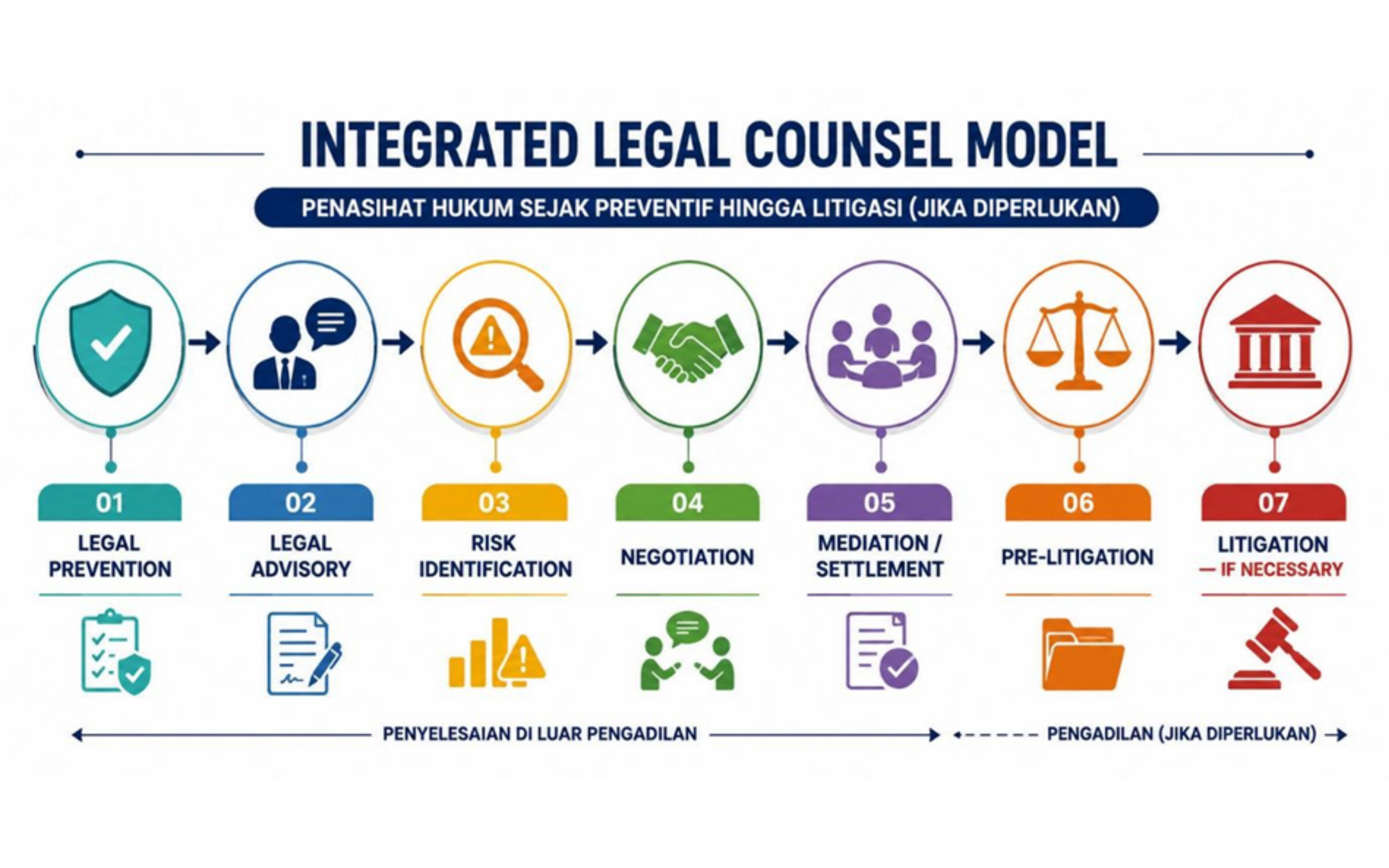
Figure 1. Integrated Legal Counsel Model
In practical terms, the model can be developed through the sequence Prevention → Advisory → Negotiation → Mediation → Settlement → Pre-Litigation → Litigation. Litigation is positioned as an option when the preceding mechanisms do not produce an adequate resolution. This approach is consistent with the existence of alternative dispute resolution as a channel that may be used in addition to court proceedings.
The model gains additional relevance following the enactment of the 2025 Criminal Procedure Code. The law expressly includes strengthening the role of advocates as part of criminal-procedure reform and states that advocates play a role in ensuring that the rights of suspects, defendants, and convicted persons are fulfilled throughout criminal proceedings, both during examinations and outside examinations.
Strengthening the function of legal counsel does not mean turning advocates into mediators. The two functions occupy different positions. A mediator is required to maintain neutrality in assisting parties to reach an agreement, whereas an advocate works for the legal interests of the client represented. Supreme Court Regulation No. 1 of 2016 clearly regulates the function of legal representatives in assisting clients during mediation.
Within this framework, legal counsel can be developed as a settlement strategist. This function does not take over the mediator’s role, but assists the client in preparing the legal position, understanding risks, determining the limits of compromise, and evaluating the consequences of each resolution option. Such an approach has a practical basis in alternative dispute-resolution mechanisms that emphasize resolution in good faith.
From the institutional perspective of a law firm, strengthening non-litigation functions creates an opportunity to establish an end-to-end legal services model. A law firm can provide services ranging from risk prevention, consultation, and transaction drafting to negotiation, mediation, pre-litigation, and litigation where necessary. This model is a development of the scope of advocates’ legal services and the dispute-resolution options available under national law.
Accordingly, the success of legal counsel should not be measured solely by the number of cases won in court. Success can also be measured through the ability to prevent risks, avoid escalation of conflict, resolve disputes before litigation, protect clients’ interests, and create legal certainty. This perspective is consistent with the recognition of advocates’ legal services and the availability of dispute-resolution mechanisms outside court.
CONCLUSION
Legal counsel occupies a strategic position in resolving legal matters through non-litigation mechanisms. The position of advocates as an independent, autonomous, and responsible profession, together with the availability of legal services outside court proceedings, provides a basis for expanding the function of legal counsel from merely defending cases to providing legal advice and strategy.
This function should be strengthened through an Integrated Legal Counsel model, namely a model that combines risk prevention, consultation, legal analysis, negotiation, mediation assistance, pre-litigation strategy, and litigation where necessary. This model is consistent with the availability of alternative dispute resolution under Law No. 30 of 1999 and the strengthened role of advocates under the 2025 Criminal Procedure Code.
Thus, the transformation of the role of legal counsel can be formulated as a shift from ‘handling cases’ to ‘managing legal risks.’ Litigation continues to have an important place within the justice system, but it does not have to be the starting point for every legal problem. The earlier legal counsel becomes involved, the greater the room to prevent conflict escalation and build a resolution that provides legal certainty for the client.
REFERENCES
- Republic of Indonesia. Law No. 18 of 2003 on Advocates.
- Republic of Indonesia. Law No. 30 of 1999 on Arbitration and Alternative Dispute Resolution.
- Republic of Indonesia. Law No. 20 of 2025 on the Criminal Procedure Code.
- Supreme Court of the Republic of Indonesia. Supreme Court Regulation No. 1 of 2016 on Mediation Procedures in Court.

